Emergency Conservation Program Improvement Act
Why is this legislation needed?
Intense & Frequent Natural Disasters
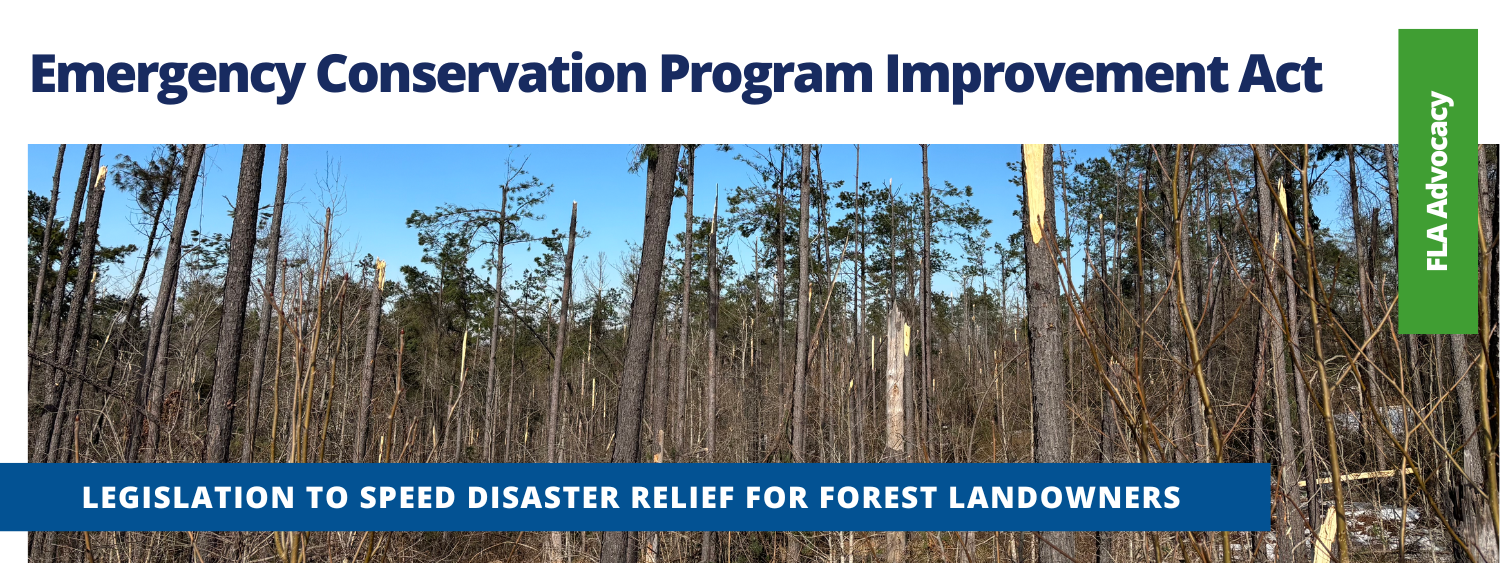
Natural disasters can erase decades of forest growth in a matter of minutes. With changing climate patterns, the frequency and intensity of these events continue to rise.
To Keep Our Forests as Forests
When reimbursement for restoration costs is delayed for months, many forest landowners face financial pressure that can make selling their land, sometimes for non‑forest uses, a more practical alternative.
Not All Wildfires Start Naturally
Right now, these programs only apply to wildfires caused by natural events, despite the fact that a significant number of wildfires are human‑caused.
What the Emergency Conservation Program Improvement Act Does:
- Allowing advance payments of up to 75% of emergency measure costs under the Emergency Forest Restoration Program (EFRP) — before you carry out the work.
- Expanding advance payments under the Emergency Conservation Program (ECP) to cover farmland and conservation structure repair, replacement, and restoration — not just fencing.
- Giving ECP recipients 180 days to use disbursed funds, up from the current 60-day window.
- Broadening wildfire eligibility to include man-made fires spread by natural causes, and wildfires caused by the federal government.
How You Can Help:
- Contact your Members of Congress. Urge them to support and cosponsor the legislation.
- Support FLA’s Advocacy Tools
- Contribute to FLA’s PAC so we can enhance the tools we need to elevate your challenges and commonsense solutions to lawmakers at every level.
“I’m thrilled to see the House pass my bill to protect Louisiana’s signature timber economy. We are quickly approaching wildfire season, and when disaster hits, recovery cannot wait. Our family foresters and livestock producers shouldn’t be left picking up the pieces after their own after extreme weather events, and often don’t have the operating cash to do so. My legislation would ensure that help is available as soon as disaster strikes, with more flexibility and less red tape.”
Congresswoman Julia Letlow